The Philosophy of the Tannerhof
How We Want to Live
How We Want to Live
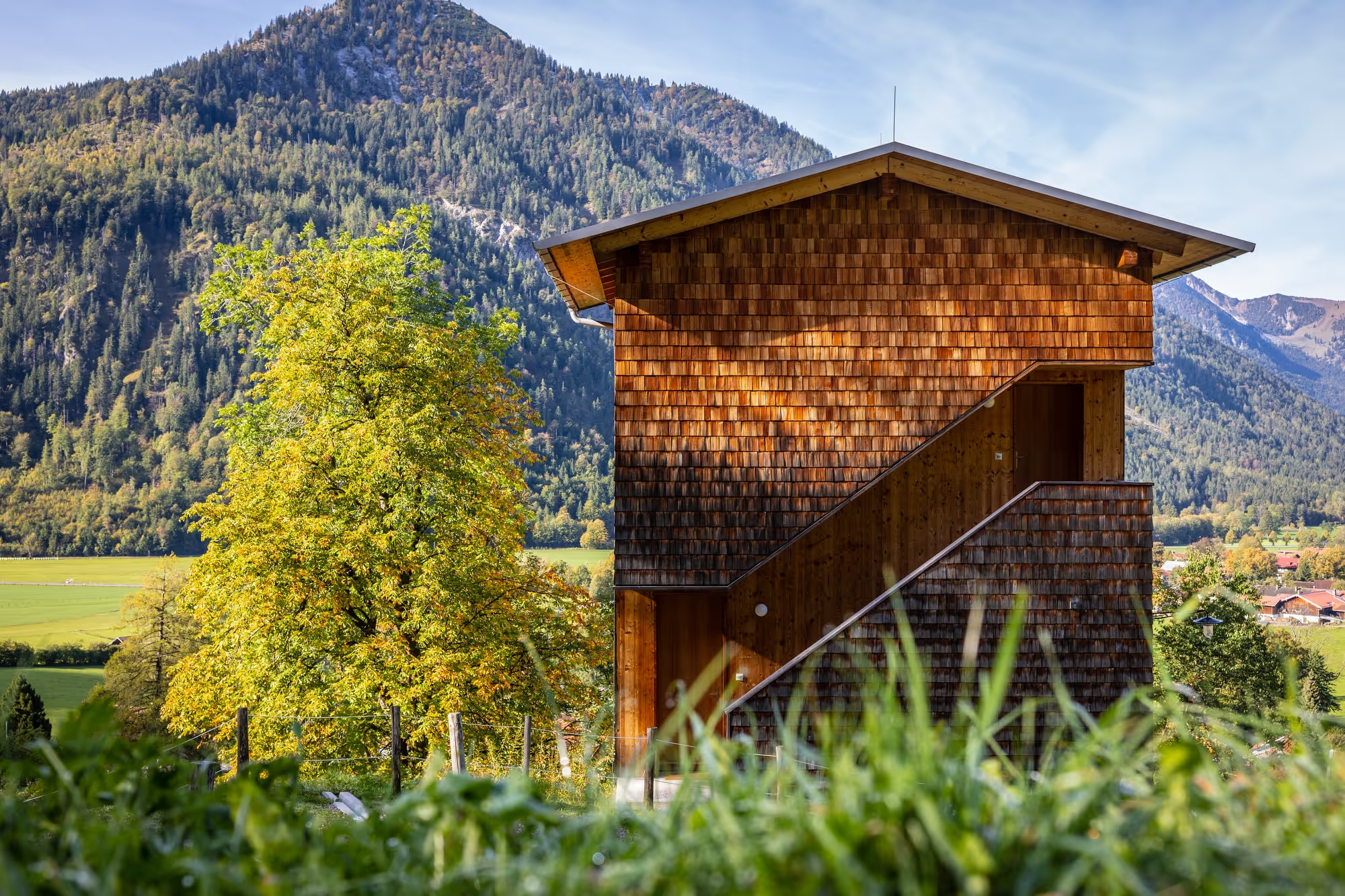
The Tannerhof is complicated and confusing, moving between hotel, health, organic gourmet cuisine, art, and nature. It doesn’t always want to make things easy for its guests, nor for itself; and certainly not for tourism experts, hotel classifiers, review portals, or travel sites.
Because what the Tannerhof has become through its development is strange, and its history is lyrical. What it is now is ambiguous, artful, and affectionate. Vacation, health, fasting, 5-course menus, rooms from 9(!) to 36 sqm, hut towers, air huts, high culture, pop, theater, politics, and music. Actually, none of that fits together at all. But then again, it’s wonderful to like completely different things.
Oscillating between genres and levels, between old and new, high and low. The only unrealistic thing is the artificial focus on a single dimension—"design," for example. What is often called aesthetics or style in the design hotel industry, but actually means death, is avoided by the Tannerhof like an evening spent behind the scenes of a cheesy variety show.
Normality, relaxation, the coexistence of young and old, of loud and quiet, of strong spirits and herbal tea. We take that seriously. But we don’t necessarily take ourselves seriously all the time. That creates friction, and friction generates warmth, and that is exactly the warmth you find at the Tannerhof.
Here, the architecture and philosophy of the Tannerhof are finally strict: Chacun à sa façon.
What sounds like a cliché can also be a philosophical statement, if you only want it to be.
In some respects, the Tannerhof is provocative; it seems simple, almost naive, affectionate, quirky, and digitally slowed down. It presents itself as old-fashioned, yet it radiates SCIENCE FICTION—less is more.
Burgi von Mengershausen says: »There are definitely people who think the Tannerhof is silly. And that’s how it should be. Obviously. We think some things are silly, too. But that means: there is a place here that is so open and free that a great deal can fit inside it. There are places and hotels that are very clear and distinct and boring as hell. And then there is the Tannerhof.
Our guests—or so we feel—are mostly looking forward to it, and most of them know, feel, and understand what it’s all about and take what they need. And that makes us happy, too!«





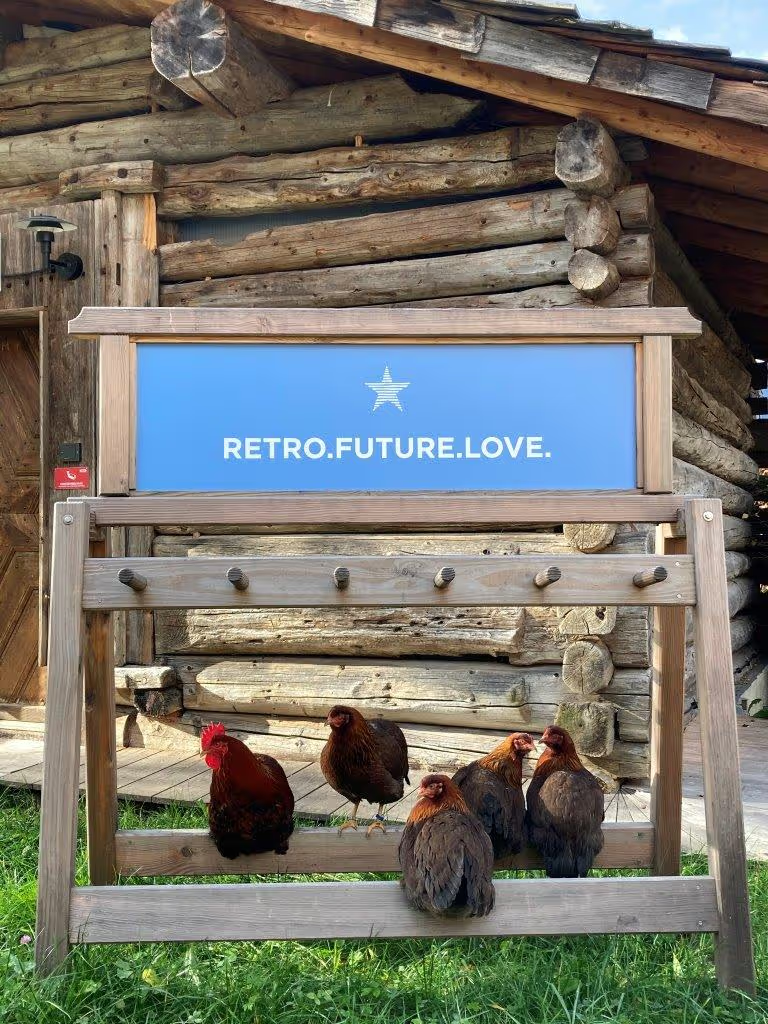
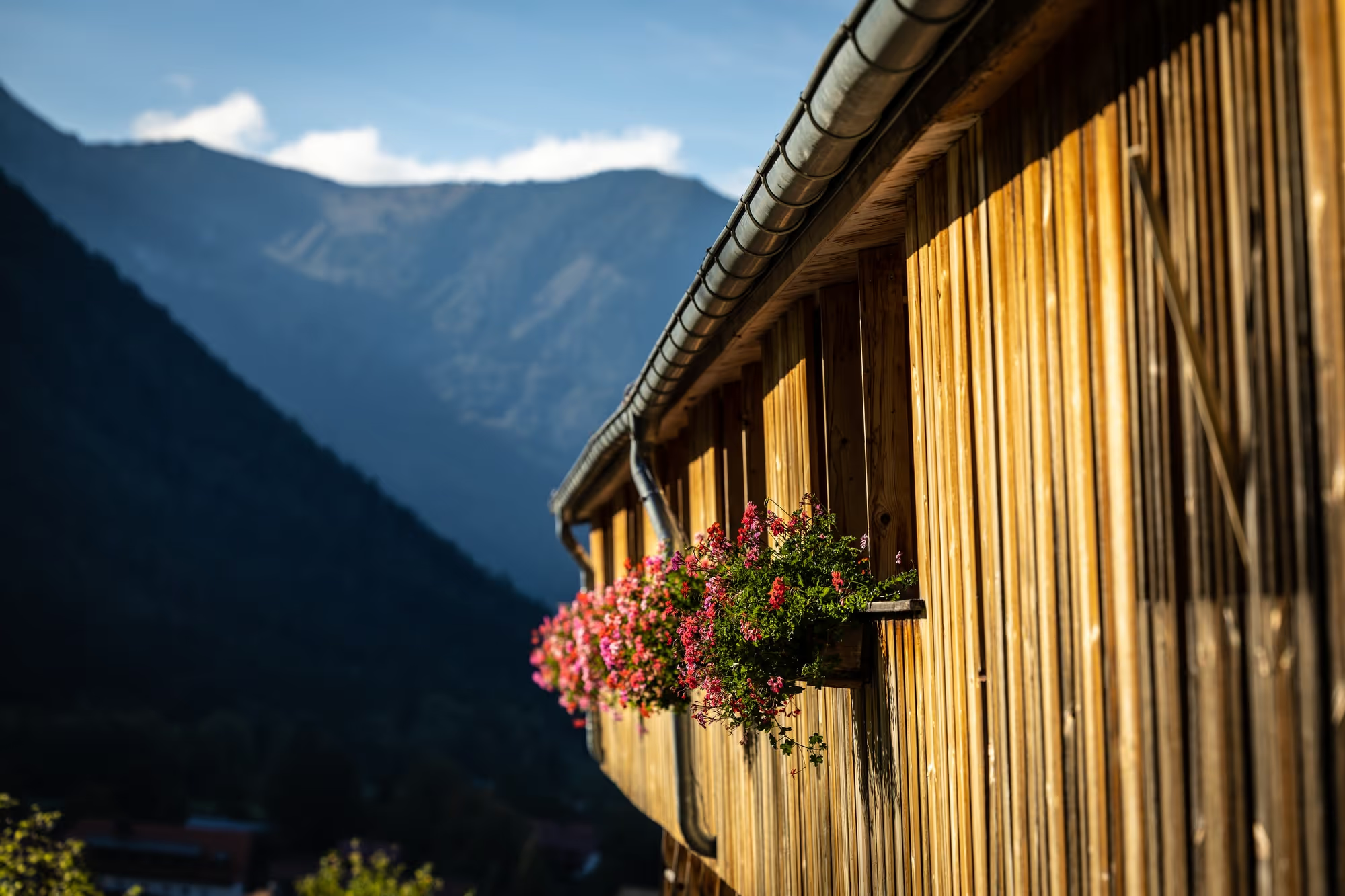


Where does "HOW WE WANT TO LIVE" come from?
Musician Jan Müller of the band Tocotronic cared for an elderly lady named Elsa Bablitzka during his community service. A pen-pal friendship developed from this.
Ms. Bablitzka, who passed away in 1994, had a very peculiar handwriting that looks like a mix of Sütterlin script and contemporary writing. She also wrote with a great deal of anger. She was a very angry woman. And a great artist who, unfortunately, did not make it into art history. Jan Müller took the phrase from these letters by Elsa Bablitzka, and we borrowed it as our headline.
Thank you.