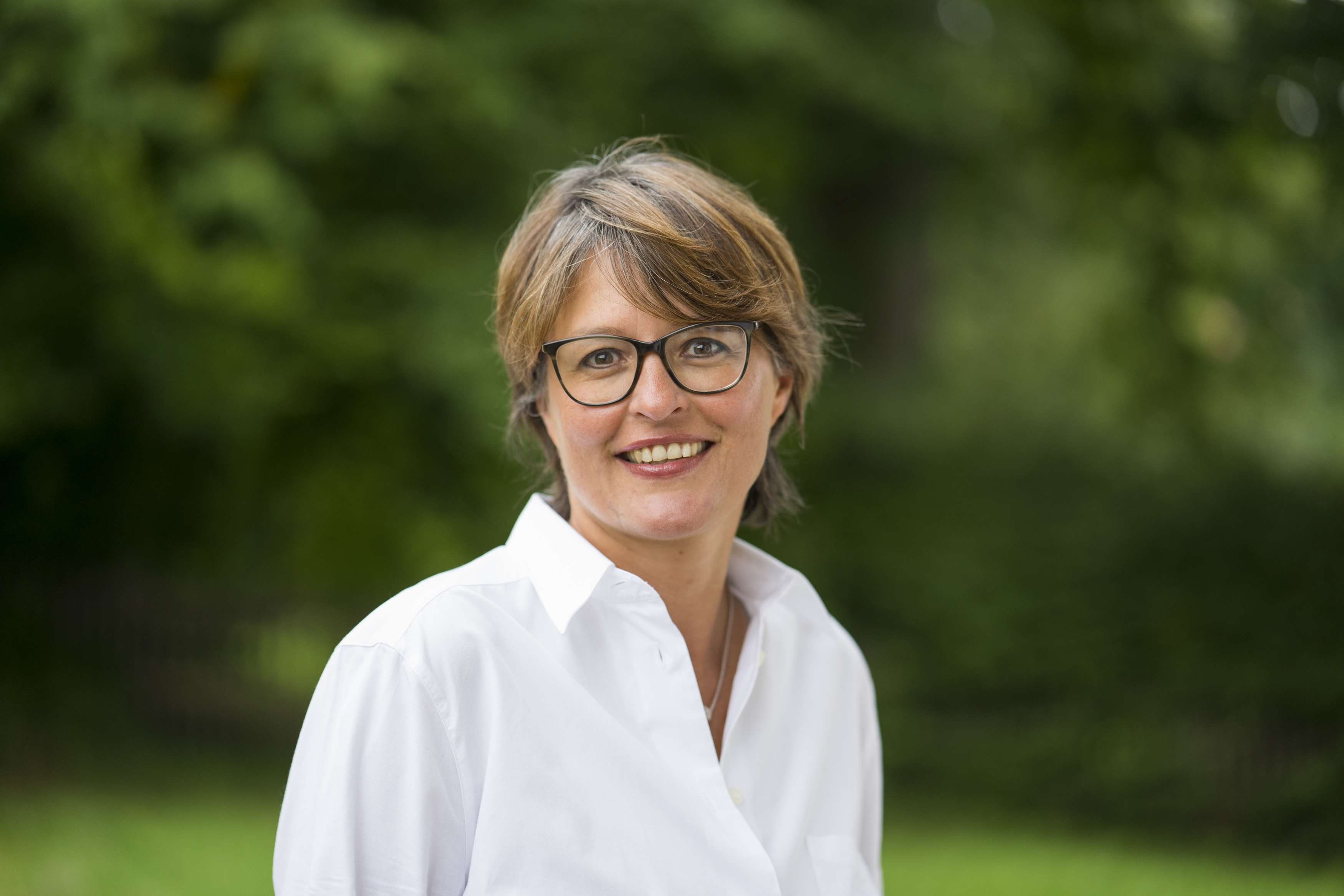
How did you get here? What led you to take up nature coaching at the Tannerhof?
I think there were two things that shaped me. First, nature and herbal medicine. Plants have accompanied me my whole life, from childhood on, in the garden with my grandmother. I always perceived plants differently. It is not only about active compounds – to me, plants are more than that. They carry a quality. Every plant has its own character and its own quality. A daisy is simply different from an oak.
The second theme that has stayed with me is consciousness. How do I perceive? What stories do I tell myself, and how do I act on them? That is the big subject of our inner beliefs.
My path led me through the school for natural healing, then to training as a herbal educator and various other courses. Alongside that I worked on the subject of consciousness and trained in hypnosis, specifically in the field of naturopathic hypnosis. Eventually I came to the neuromental training programme, which I did over a year in Salzburg. There I packed my “toolbox” and introduced it here. Then the idea came up to develop an offering under the name nature coaching. But because “nature coaching” already exists as a term, I went and trained in nature coaching as well.
That was an important experience, because there I had to unpack my toolbox again. It is really about finding solid ground under your feet first. It is about letting go of the many concepts and methods we have built up, and instead developing trust in yourself. It is about feeling again that many answers are already within us, just waiting to be discovered.
What principles is nature coaching based on?
That often depends on whom you learned from. I learned from Andre Lorino, for example. Principles? I think they are really ancient principles – something original, set deep in the nature of the human being and of the natural world. It is nothing new, more a rediscovery of something that used to be self-evident. In earlier times, philosophers walked through nature to gather impulses and ask themselves questions. I believe the fewer principles you bring with you into nature, the better.
How does a session with you unfold?
Usually I first ask whether the person has a particular wish – whether we should drive somewhere, start from here, or whether they would rather climb a hill or go to the water. Most of the time, though, there are no concrete ideas. I try to find a sheltered space, and also to get a little away from the Tannerhof, to the Niederhoferalm, for instance.
There are different options there: a small enchanted forest, a riverbed, or pools of water. I then let the person set off and watch how they move.
At the start, many are still caught in their heads and walk very fast, still carrying that drive to perform that we hold inside us almost constantly. Then I say: “Try walking more slowly. Simply notice what is around you. How does the ground feel? How do you feel?”
That is often the first moment they come out of thinking and into the body and feel what they perceive. Many then feel unsure: “What am I supposed to do now?”
I say: “It is okay if you feel uncomfortable. That may be there too.” It is not about making unpleasant feelings go away, but about allowing them and looking at them: How does this feel? Where do I feel the pressure?
After a while, many give themselves permission to simply be and to feel what happens. At first this is unfamiliar, but often very freeing. In the beginning I thought I had to step in actively. But I have learned that the most valuable moments arise when I am simply there and hold the space and allow everything to show itself – whether tears, anger, or silence.
How do you handle rain or winter? Do you need a certain level of fitness?
Apart from thunderstorms or gales, where it is not possible for safety reasons, the coaching can take place in any weather, though of course it does not have to. I always bring rain jackets, hot water bottles, and blankets so that people feel comfortable.
And it is precisely under such conditions that the most important things often happen – things that might never have surfaced in fine weather. Rain clears. The deepest experiences often come when someone has the courage to go out in the rain. From inside, rain looks far from inviting – but once you move through it, it is often wonderful.
In winter I have rarely had nature coaching sessions so far, but it is just as possible. The choice of path matters – I would not take slippery trails. Snow offers wonderful possibilities: leaving tracks, shaping something.
Physical fitness? Not at all! I limp myself sometimes, depending on the state of my hip. It is not about performance, but about walking slowly and perceiving.
Are there people for whom nature coaching is more or less suitable?
When I ask why someone has come to me, the answer is often: “It simply appealed to me, but I don’t quite know what lies behind it.” That is really the best thing – to have no expectations.
It is true that not everyone is a fit. Many people have demanding jobs and complex life situations they are looking for solutions to. They want something concrete to take away. That is fine – but then nature coaching does not fit: it is not about a new tool, not about a new concept, and not about a new technique. It is about learning to perceive again – having a space for yourself, allowing yourself that, and regaining this trust. That, for me, is the essence of this offering.
You also offer the herb walk at the Tannerhof. Do you see points where it overlaps with nature coaching?
Yes. On my herb walks too I mainly try to explain what the plants do – that is what interests people: “How can I use it?” But I do try to let small impulses flow in, that you might look at a dandelion, for example, which is wonderful as a remedy for the liver and gallbladder. And also to consider its capacity for transformation: the dandelion can root up to one and a half metres deep – incredible! Yet it can also break through asphalt, has that lovely yellow flower, and then suddenly, despite all its bitterness and strength, comes this seed head, this fine structure, this lightness. And when you look at how lightly the seeds sit on the base of the calyx, that it takes only a little wind and they lift off – and it lets go again. Despite all its firmness. And that you can simply look at this, without my saying: “You have to apply this to your life now!” Of course letting go is a big theme, but I mean, it speaks to some people and not to others.
What lessons do you personally draw from nature?
In nature I learn that change is life – or that life is change, that classic calendar saying. The tree has its injuries, perhaps a branch has broken off, yet it is still there. The elder looks almost dead in winter – and then it sprouts again and brings fine blossoms and strong berries. Each has its own qualities and its own character, and they have this classic trust that all is well – though “well,” of course, is again a judgement. Everything is included: illness, death, bad feelings, good feelings.
I believe that nature, as a space of resonance, can be a great and good companion for all of us – through many different phases and questions. This nourishing of the soul, simply this being allowed to be, without having to be – that, for me, is something essential, something we lose more and more, because we feel: “I have to perform, I have to look a certain way, I have to have a certain figure.” All the images we carry of how we are supposed to be let this original quality slip away.
But I believe this being allowed to be again, being allowed to draw on what is original, on what makes me who I am – that is what nature can teach me well.