Exercise While Fasting: Which Movement Fits the Fasting Week
Why measured movement belongs to therapeutic fasting, which pace carries, and how the Tannerhof embeds endurance, strength and rest into the fasting week.
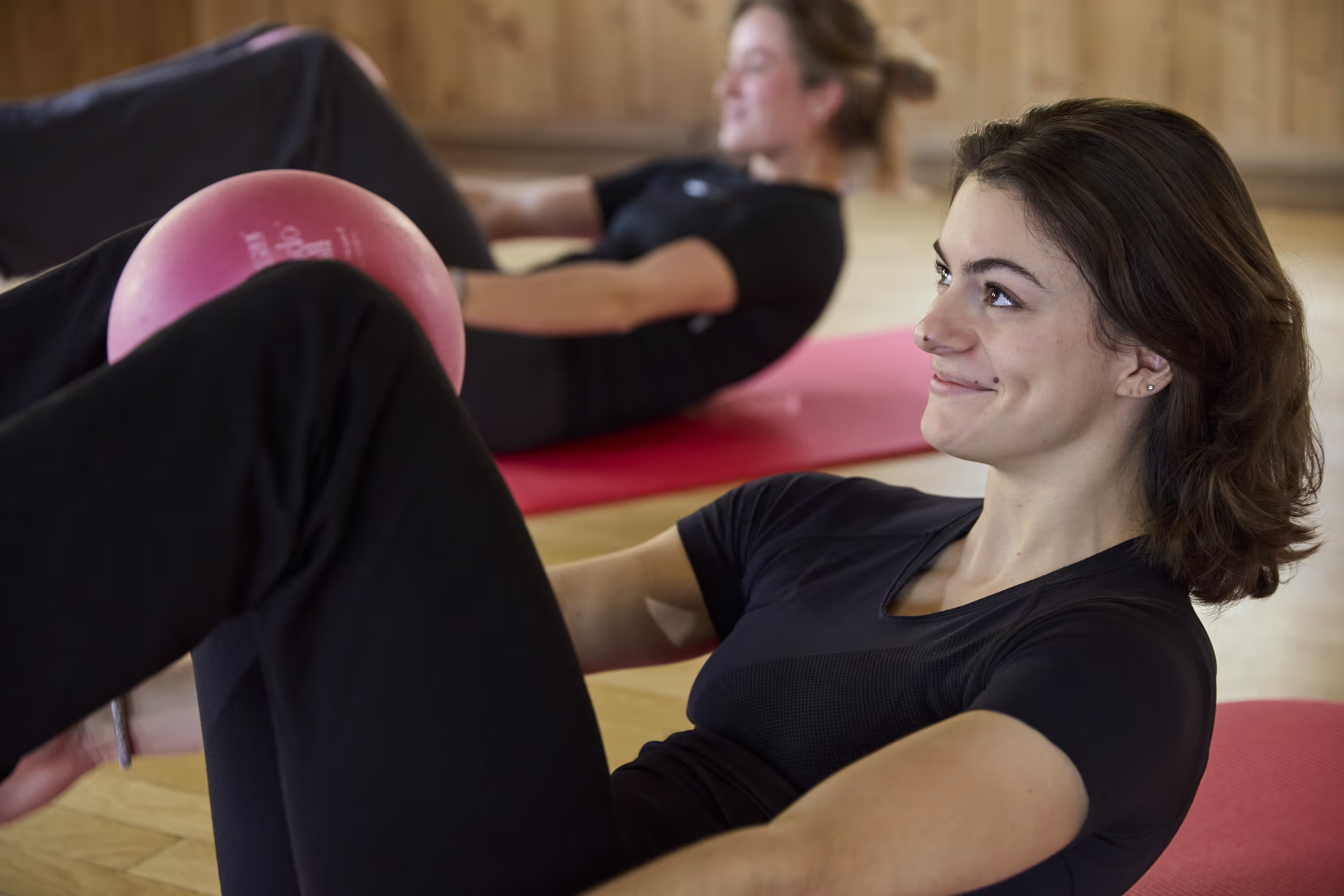
While fasting, measured movement at a calm pace fits: moderate base endurance training and moderate strength training, plus yoga, Feldenkrais, tai chi, resistance bands and breathing therapy. Hiking and summit tours are possible, only slower than usual. New athletic record performances are not on the agenda, because the body nourishes itself from within.
The essentials at a glance
- Movement has always been part of Buchinger fasting therapy, in moderate doses and at a calm pace.
- What fits is moderate base endurance training and moderate strength training, complemented by yoga, Feldenkrais, tai chi, resistance-band training and breathing therapy.
- Hiking and summit tours remain possible, only slower than in everyday eating life – the body nourishes itself from within.
- Studies show that strength is largely preserved during fasting while peak endurance performance declines – a good reason to ease off the pace.
- At the Naturhotel Tannerhof an endurance and strength fitness area, the outdoor natural pool and the BadeHarpfe are ready, with medical supervision.
Why movement belongs to fasting
Those who fast think first of stillness, of a herbal tea in the morning, of a wide view into the valley. Movement still belongs to it, from the very start. Otto Buchinger already combined abstinence with movement, fresh air and warmth – not as an add-on but as part of the method. Therapeutic fasting according to Buchinger is the deliberate, time-limited abstention from solid food and stimulants, and during this time the body is not to be shut down but kept at a calm rhythm.
At the Naturhotel Tannerhof, therapeutic fasting has been medically supervised for more than 70 years, and movement has its firm place in it. The fasting-therapy guidelines, available from the Medical Association for Fasting and Nutrition (ÄGHE), list physical activity in the fresh air as part of the treatment. Anyone who wants to see the concrete framework at the house and book online will find it in the Body Detox programme, the medically supervised therapeutic fasting at the Tannerhof.
Movement while fasting does not mean training against the body but with it. It keeps the circulation awake, supports the metabolism through the changeover and gives the day a shape. Above all it changes the experience: a walk across the alpine meadow, a few calm breaths in the open, a loop along the mountain stream – these are not training sessions but part of the fasting experience. The question is therefore less whether you move than how and to what degree.
What pace fits fasting
The principle is simple: measured rather than maximal. During fasting the metabolism switches to burning fat, glucose steps back, fatty acids and ketone bodies take over. This changeover is described as a central mechanism of fasting both by the review article by de Cabo and Mattson in the New England Journal of Medicine (2019) and by the ÄGHE guidelines. For movement this means the short, quickly available energy reserves are scarcer. Anyone who takes this into account starts more slowly – and gets through the week well precisely because of it.
How the body responds to exertion during fasting has been described more closely by a recent study. A study by Kolnes and colleagues (Nature Communications, 2025) followed healthy adults over seven fasting days and tested strength and endurance. The result fits the Tannerhof practice well: leg muscle strength was largely preserved over the fasting week, while maximum endurance performance – peak oxygen uptake – fell by around 13 percent. Put differently: strength carries, high endurance peaks carry less. This is not a deficiency but a sensible adaptation. The body saves its fast reserves and lives from within.
From this follows the Tannerhof stance, which can be put in a single sentence: new athletic record performances are not on the agenda during the fasting week. Those who otherwise run personal bests now run more slowly. Those who collect summits take the summit at ease. The measure follows the fasting, not the ambition. Der Körper nährt sich von innen – the body nourishes itself from within – and it is precisely this image that guides movement through the whole week.
Endurance and strength – moderately dosed
Two pillars carry movement during fasting, both deliberately in moderate form.
- Moderate base endurance training. Walking, hiking at a calm pace, easy cycling or laps in the pool – efforts during which you can still talk and the breath stays calm. This base work fits the fat burning of fasting, because it draws on exactly those reserves the body is now using more.
- Moderate strength training. Gentle, well-guided exercises with your own body weight, with a resistance band or light weights, that challenge muscles and joints without overtaxing them. Since strength is largely preserved during fasting, you can work calmly but effectively here.
Both find a place at the Tannerhof: in the endurance and strength fitness area of the BadeHarpfe you can dose both in measure, with a view outside rather than into a mirror. The pace remains key. It is not about setting a training stimulus or building muscle but about keeping the body in movement and accompanying the changeover. If you like, you can have the medical team agree the right measure with you – every fasting day is different, and every person brings a different starting point.
Yoga, Feldenkrais, tai chi and breath
Alongside endurance and strength, fine, slow movement has a special value during fasting. It connects the body and the mental side, keeps you supple and calms you at once – and it fits days on which the body receives little and the senses more.
- Yoga in a calm form stretches, opens and brings the breath into an even rhythm.
- Feldenkrais trains small, mindful movement patterns and sharpens awareness of your own body.
- Tai chi leads through balance and concentration in slow, flowing sequences.
- Resistance-band training strengthens gently on the joints and can be finely dosed.
- Breathing therapy works with the calmest of all tools and deepens the inner quiet of the fasting week.
These forms of movement are part of the broad spectrum of therapies and treatments at the Tannerhof, which during fasting reaches far beyond movement: medical history-taking and examination including bioimpedance analysis, medical follow-up consultation and closing conversation, IHHT altitude training depending on the programme, Kneipp alternating affusion, hayflower and aroma wraps, fasting massage, detox massage with king’s oil or acidosis massage, and breathing therapy. An overview of the therapies and treatments at the house is given by the treatment offering. For the mental side, psychotherapeutic coaching, nature coaching, business and communication coaching and art therapy accompany guests at the Tannerhof.
Hiking and summit tours at a fasting-appropriate pace
In the mountains, movement arises almost on its own. You walk across the alpine meadow, along the mountain stream, up to the next rise – and the path sets the measure, not ambition. Walking sorts the thoughts, brings the breath into a rhythm and leads through a landscape that helps you slow down rather than working against it.
Hiking and summit tours remain possible during the fasting week. They simply happen more slowly than in everyday eating life, with more breaks and fewer metres of ascent at a stretch. Those who accept the pace often experience the mountains more intensely than usual, because looking is given room. Anyone who wants to walk purposefully while fasting will find a framework of their own in the combination of Buchinger therapeutic fasting and guided mountain hikes – more on this on the page Hiking and Fasting. For everyone else, the paths around the house are enough: the Tannerhof sits on around 16 hectares of its own grounds, with access to the tours around Bayrischzell and a wide view of the Wendelstein.
All that matters is that the walking follows the fasting day. On a light day it may go further out; on a quieter day it stays a short loop. The mountains do not run away, and that is exactly the point: during the fasting week, essentially everything fits, just more slowly.

Water, warmth and mountain view
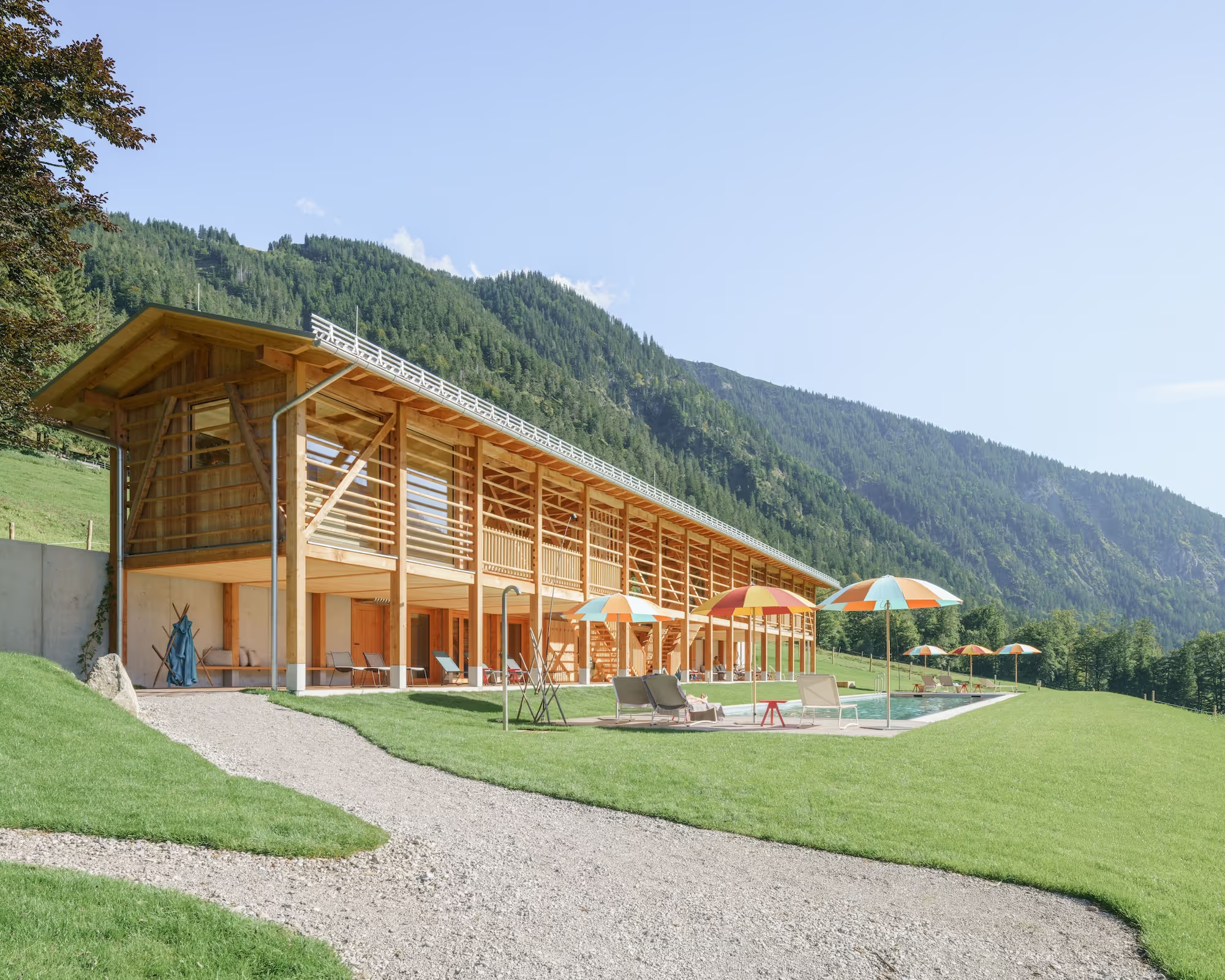
At the Tannerhof, the element of water also belongs to movement. The BadeHarpfe, opened in 2025, combines a Finnish sauna, a panorama relaxation room, the endurance and strength fitness area and the outdoor natural pool. The pool measures 25 by 5 metres, is made of stainless steel, naturally cleaned and heated from April to October; in winter it becomes a place for ice bathing. It looks out between the Wendelstein and the Sonnwendjoch – a swim with a mountain backdrop, a quiet high point of the day, especially during a fasting week. A few calm laps are moderate endurance training in the best sense: even, carried, without the spur of ambition. Schwitz-lach-tauch – sweat, laugh, dive.
So movement and rest fit into one another. A round in the pool, a lap under the open sky, then the warmth of the sauna and the wide view from the panorama relaxation room. What comes after the movement is no less important than the movement itself. Those who fast learn to value this alternation anew: walking and looking, moving and coming to rest, challenging the body and giving it time.
Movement, medical supervision and landscape
At the Tannerhof three things belong together: the method, the medical supervision and the landscape. The method gives structure, the medical team gives safety and individual direction, and the mountains give expanse. None stands above the other. Fasting in a moving landscape is considerably more intense – and a moving landscape unfolds its full depth only with knowledgeable guidance.
This is especially true of movement. What measure fits on a particular day can be agreed well with the medical team. The doctors at the Tannerhof are experts in fasting; they monitor values and circulation as well as the individual course. The admission consultation on the first fasting day is designed holistically: medical history, physical examination including bioimpedance analysis and a medication review are part of it, as are the questions of why someone is fasting, what goals exist at the Tannerhof alongside the fasting and what fasting experience is already there. This creates a clear picture of how much movement does the individual good. The length of stay is booked before arrival; from the admission consultation onwards, duration and course can be adjusted together with the accompanying doctors, for instance extended.
So more remains of the movement during the fasting week than a few steps. A body memory remains: how good walking feels, how clear the head becomes after a calm round, how little it sometimes takes. Perhaps that is precisely the old Tannerhof idea in today’s form: Mensch, werde wesentlich – become essential.
Movement while fasting at the Tannerhof
Anyone looking for movement while fasting will find the right measure at the Naturhotel Tannerhof: moderate base endurance training and moderate strength training, yoga, Feldenkrais, tai chi, resistance-band training and breathing therapy, plus hiking at a fasting-appropriate pace, the endurance and strength fitness area and the outdoor natural pool of the BadeHarpfe. More on the concrete framework and online booking is at Body Detox, more on the link between walking and fasting at Hiking and Fasting.
Note: This article describes the stance and practice of the Naturhotel Tannerhof on movement while fasting. It does not replace individual medical advice. A telephone medical pre-consultation is available on request.
FAQs
Yes, at a measured pace. Movement is part of Buchinger fasting therapy. At the Tannerhof, moderate base endurance training and moderate strength training fit, plus yoga, Feldenkrais, tai chi, resistance-band training and breathing therapy. Hiking and summit tours are possible, only slower than usual. New athletic record performances are not on the agenda during the fasting week, because the body nourishes itself from within.
Calm base work fits best: walking and hiking at an even pace, calm laps in the pool, moderate strength training and slow forms such as yoga, Feldenkrais and tai chi. Breathing therapy complements the finer side. What matters is that the effort stays moderate and follows the particular fasting day.
Moderate. Studies show that muscle strength is largely preserved during fasting while maximum endurance performance declines. At the Tannerhof this means no stimulus training, no competition pace, but a calm measure that keeps the circulation awake. The medical team helps find the right intensity for your own course.
With movement the focus is not on building muscle but on keeping the body in measured motion. Research on the Buchinger method suggests that the musculature is taxed less than often feared and recovers like other tissue after fasting. At the Tannerhof the medical team accompanies this course individually.
Yes. Hiking and summit tours remain possible during the fasting week, only at a fasting-appropriate pace: slower, with more breaks and fewer metres of ascent at a stretch. Those who accept the path often experience the mountains more intensely. Anyone who wants to walk purposefully will find a framework of their own in the combination of therapeutic fasting and guided mountain hikes.
At the Tannerhof there is an endurance and strength fitness area in the BadeHarpfe, the 25-metre outdoor natural pool with a view between the Wendelstein and the Sonnwendjoch, as well as yoga, Feldenkrais, tai chi, resistance-band training and breathing therapy. Added to this are hiking trails around Bayrischzell – all medically supervised and measured to suit the fasting week.
Sources
- Medical Association for Fasting and Nutrition (Ärztegesellschaft Heilfasten und Ernährung e. V., ÄGHE): Guidelines on fasting therapy (consensus 2002, update 2013).
- Kolnes KJ, Nilsen ETF, Brufladt S, Meadows AM et al.: Effects of seven days’ fasting on physical performance and metabolic adaptation during exercise in humans, Nature Communications, 2025.
- de Cabo R, Mattson MP: Effects of Intermittent Fasting on Health, Aging, and Disease, New England Journal of Medicine, 2019.
- In-house sources: Naturhotel Tannerhof, Body Detox, Hiking and Fasting and treatment offering.
Health programs at Tannerhof

Body Detox Fasting

Mental Resilience
Longevity

Immune Booster

Aesthetics

Nutrition
"I feel a lightness I have missed for a long time"
ELLE Magazine