Kneipp Applications: Affusions, Water Treading and What They Do
Knee affusion, water treading and alternating affusion: order, duration, evidence and contraindications

Kneipp therapy means brief cold stimuli on warm skin: affusions, water treading and baths are part of a teaching built on five pillars, recognised as intangible cultural heritage since 2015. Applied regularly, they train the vessels and circulation and strengthen the immune system. Those who know the right order, duration and contraindications can try the applications safely.
The essentials at a glance
- Kneipp therapy has been listed in the national register of intangible cultural heritage since 2015 and rests on five pillars: water, nutrition, medicinal plants, exercise and a balanced way of life.
- The knee affusion uses water at 16 to 18 degrees, applied cold up the outside of the right leg to just above the knee, back down the inside, then the left; shake the water off, do not towel it.
- Water treading lasts about 30 to 60 seconds in stork walk, with the water reaching a hand's width below the knee; stop when the cold becomes clearly uncomfortable.
- Studies show positive effects on veins and vessels, on blood pressure and on the immune system: fewer colds, better immune readings, lowered blood pressure in mild hypertension.
- Kneipp applications should be avoided with urinary tract infections, abdominal infections, severe circulatory disorders, cold feet and during menstruation.
Which Kneipp applications are there?
Kneipp therapy begins with a small reversal of what we commonly take for well-being: it is not warmth that provides the stimulus, but cold — brief and precise, on skin that is thoroughly warmed. In the nineteenth century, the Bavarian priest Sebastian Kneipp developed this stimulus-response principle into a teaching of health based on regular training and hardening, one that seeks to bring body, mind and soul into harmony. Those who would like not only to read about the affusions but to feel them for themselves can experience them in the bathhouse, as part of the treatments of the house.
Water, however, is only one of five pillars. The teaching also includes a balanced diet, medicinal plants, exercise and an even way of living. Only together do they form what Kneipp called holistic therapy: not a single application against a single ailment, but an attitude to everyday life that trains health rather than prescribing it.
- Affusions: Water is slowly guided over the skin with a hose or watering can, usually from the foot to just above the knee. The knee affusion is the classic form; the alternating affusion combines warm and cold temperatures.
- Water treading: You walk on the spot in cold water that reaches a hand's width below the knee, lifting one leg completely out of the water with each step — the so-called stork walk.
- Baths: Arms or legs are immersed in cold water for a few minutes, often as an alternating bath followed by warm water.
- Washings: A damp, cool cloth is drawn briskly over the arms, chest or face — the gentlest form of water application.
How deeply this knowledge is anchored in everyday life is shown by the recognition itself: since 2015, Kneipp has been listed in the nationwide register of intangible cultural heritage of the German UNESCO Commission. The tradition is carried by more than 600 Kneipp associations with around 160,000 members, as well as by Kneipp health resorts and spas that maintain facilities and pass the applications on in everyday practice.
In what order are the Kneipp affusions performed?
The knee affusion is considered the gentlest introduction to water applications, and the alternating affusions at the Tannerhof deliberately begin with it. What matters before every affusion: the legs must be warm. Anyone with cold feet moves around a little beforehand, because the cold stimulus is only pleasant on warmed skin.
- Set the water to cold, around 16 to 18 degrees.
- Begin with the right leg, the one farther from the heart: pour slowly from the little toe along the outside of the leg up to just above the knee.
- Pause there briefly, one to two seconds, then return down the inside of the leg to the foot.
- Pour over the left leg in the same way.
- Shake the water off rather than drying it.
- Warm the legs again afterwards, with a few steps, or in the evening straight under the blanket.
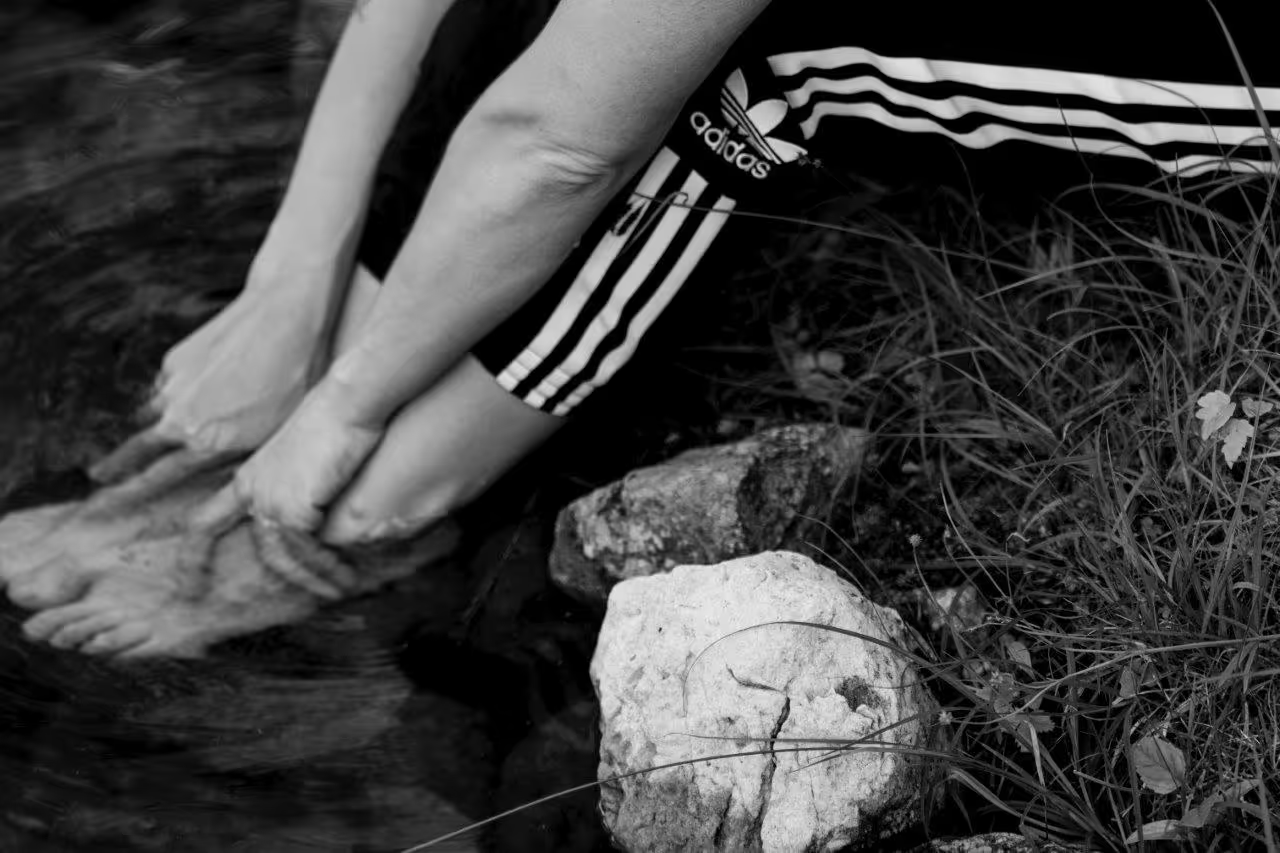
In water treading, the water reaches a hand's width below the knee. You walk on the spot in the stork walk, lifting one leg together with the foot completely out of the water with each step, the toes bent slightly downward. Depending on the water temperature, the duration is about 30 to 60 seconds; you stop as soon as a distinct sensation of cold or a cold pain sets in.
The aftercare is as simple as the application itself: the water is shaken off, and shoes and socks go on straight away. Warming up happens through walking, ideally only with warm feet, or in the evening in bed, perhaps with warm socks. Under no circumstances should the body cool down, and water treading is never combined with an arm bath at the same time.
What benefits does Kneipp therapy offer?
The cold stimulus is above all a training for the vessels and the circulation. In response to cold water, the blood vessels of the skin contract; as the body warms again, they widen, and the skin turns rosy and well supplied with blood. Those who repeat this regularly are training this vascular regulation, very much in the spirit of the hardening Sebastian Kneipp had in mind. A systematic review by LMU Munich evaluated the studies from 2000 to 2019, including 14 controlled studies, nine of which showed clear improvements. The most important findings:
- Blood pressure: Among rehabilitation patients with mild to moderate high blood pressure, blood pressure fell significantly more with additional Kneipp applications than with rehabilitation alone, above all the systolic value in the 24-hour measurement.
- Low blood pressure: Kneipp affusions are traditionally regarded as circulation training for anyone who feels dizzy in the mornings. In an observational study with 530 spa guests, blood pressure values that were too low rose after the cure, while those that were too high fell.
- Immune system: Healthy people who did water treading daily for two weeks had fewer colds and fewer days of illness in the following three months than a comparison group. Morning water treading measurably improved immune values in the blood in a randomised study, and people with chronic bronchitis had fewer respiratory infections after ten weeks of cold affusions and washings.
- Veins and heart: In chronic venous insufficiency — heavy, tired and swollen legs — the benefit is the best documented. In mild heart failure, Kneipp applications at home improved quality of life and resting pulse.
- Wellbeing: The studies also found improvements for menopausal complaints and sleep disorders.
Most of these studies are small, and their results are therefore indications rather than guarantees. A second systematic review of 20 randomised controlled studies with 4,247 participants found significant positive effects in 46 of 132 comparisons, most clearly in chronic venous insufficiency, and also in menopausal complaints, fever, cognitive and emotional measures, and days of illness at work. The authors call for further, larger studies to confirm the effects with even greater certainty.
What is clear, by contrast, is when cold applications are out of the question. With water treading and the cold affusions, caution is advised, or the application is unsuitable:
- with urinary tract infections as well as bladder and kidney conditions
- with abdominal infections in women
- with more severe arterial circulatory disorders, for instance when pain sets in after a short walk
- when you feel cold or have cold feet, because the stimulus presupposes warm skin
- during menstruation
Applied regularly, Kneipp therapy is thus a beneficial training for the blood vessels, the circulation and the immune system: it wakes you up, soothes tired legs, can have a favourable effect on blood pressure and helps you come to rest in the evening. Anyone taking medication, for instance for high blood pressure, should therefore not stop taking it on their own; where conditions already exist, the applications are best coordinated with a doctor.

Where can you practise Kneipp during your stay at the Tannerhof?
In the bathhouse of the Tannerhof, the Kneipp alternating affusion is among the water therapies. Alternating hot and cold affusions are invigorating and refreshing; you begin slowly and work up to just above the knee, in a treatment lasting about 10 minutes. In the house's own therapy catalogue, the alternating affusion is regarded as the centrepiece of classical naturopathic medicine, and it begins with the gentlest stimulus, the knee affusion. Appointments are arranged in advance through the therapy reception in the bathhouse.
The bathhouse sits between two very different buildings: the BadeHarpfe, the water and sauna unit designed by Florian Nagler, and the historic sauna hut of 1936, built from Kelo wood. Between them lie the treatment rooms, where the water therapies have their place alongside massages, packs and movement treatments.
Anyone who, after their first affusion, would like to know what else the house holds in store in the way of water, hands and quiet will find an overview on the Wellness & Treatments page — of the BadeHarpfe, the pools and saunas and the full treatment catalogue, from water therapies through massages and natural cosmetics to movement and physiotherapeutic treatments, including the option to request an alternating affusion in advance.
FAQs
Sources
- German Commission for UNESCO: Kneipp – traditional knowledge and practice according to the teaching of Sebastian Kneipp
- Kneipp-Bund: Finding calm with the knee affusion
- Kneipp-Bund Austria: Water treading, dew walking, snow walking
- Stier-Jarmer M et al. (2021): Effects of Kneipp therapy: a systematic review of the current scientific evidence (2000–2019), Complementary Medicine Research
- Ortiz M et al. (2023): Clinical effects of Kneipp hydrotherapy: a systematic review of randomised controlled trials, BMJ Open
- Tannerhof: Treatments
- natürlich (Thieme): Water treading according to Kneipp
Health programs at Tannerhof

Body Detox Fasting
Mental Resilience
Longevity
Immune Booster

Aesthetics
Nutrition
"I feel a lightness I have missed for a long time"
ELLE Magazine